Can Technology Stop the Next Pandemic?
2020 will be remembered as the year of the COVID-19 pandemic. Scientists argue that another pandemic is highly possible and it’s not too early to prepare for the next pandemic. It might even be a second wave of COVID- 19. Singapore is going through it’s second wave already as the diagram below indicates.
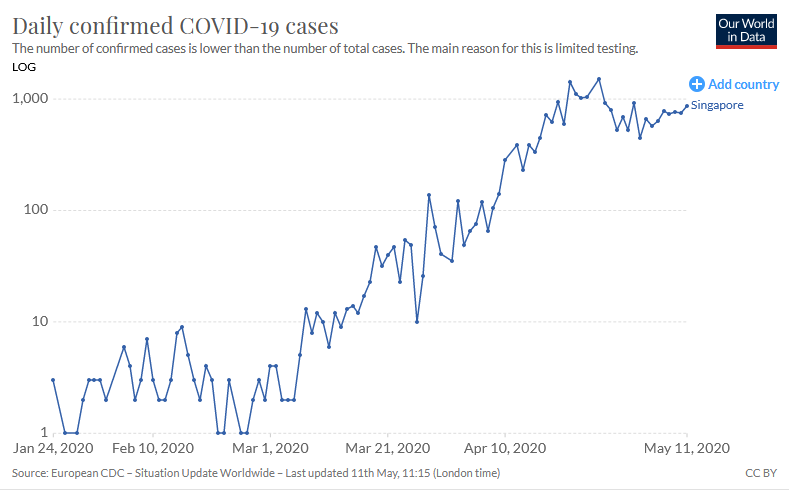 Singapore’s second wave. Source: https://ourworldindata.org/covid-cases
To stop the spread of the next pandemic, we will need the help of science and technology. Even the United Nations is urging governments to make full use of technology. This article will focus on technology and how it can stop the next pandemic.
Helping Science to Understand the Virus
For science to fight a virus with medicine or a vaccine it first needs to understand it. Science can have a better and faster understanding of the virus with the use of very fast computers and using Artificial Intelligence.
Supercomputers to the Rescue
Scientists need to run lots of calculations that require lots of computing power. This is needed in areas such as epidemiology, bioinformatics, and molecular modelling. IBM, Amazon, Google, NASA and many other companies and research institutions launched the COVID-19 High Performance Computing Consortium. To get a better understanding of how big this is, let’s compare it with the most powerful computer in the world, Summit (IBM), which can perform around 148 PFLOPS. The consortium will have an unprecedented amount of computing power of 429 PFLOPS.

Quantum Computers to the Rescue
Quantum computers are computers that perform quantum computations. In some cases, they can outperform the fastest Supercomputers of the world.
In October 2019, Google ran a simulation to prove quantum supremacy. The simulations took 200 seconds on the quantum computer. The team estimated that the calculations would have taken the world’s most powerful system, Summit, more than 10,000 years to complete.
D-Wave Systems, a quantum computing startup, announced the immediate availability of free access to its cloud computing service.
 IBM’s quantum computer. Source: https://en.wikipedia.org/wiki/Quantum_computing
AI to the Rescue
Drug discovery has traditionally been slow. AI (Artificial Intelligence) has been used to speed up genome sequencing among other things.
Healx, an AI-powered biotech company in the UK is using AI to find combination drug treatments for COVID-19.
The system Healx is using is divided into three parts:
- trawl through all the current literature relating to the disease
- study the DNA and structure of the virus
- consider the suitability of various drugs
This cannot be a manual job because of the workload required. The analysis that is required is among the 8M (eight million) possible pairs and 10.5B (that’s billion) triple-drug combinations from the 4,000 approved drugs on the market. AI can overcome this challenge.
Communication / Education
People will be more educated after this pandemic. Governments and institutions should continue educating people and prepare them for the next pandemic or epidemic.
Taiwan is considered a success story so far. The Taiwanese government and people used the lessons learned from the 2003 SARS epidemic and quickly implemented strategies in response to the pandemic. The diagram below compares Taiwan (blue colour) and Australia (red colour). Both countries have similar population.

Fighting Fake News
Fake news is spread faster than the actual virus. One of the most notorious pieces of fake news is the connection between 5G and coronavirus. People need to be educated to understand the difference between fake news and a fact or an opinion.
Technology companies are stepping up to fight fake news. Google set up a 24-hour incident response team that removes misinformation from search results and Youtube.
Twitter is removing tweets containing misleading and potentially harmful content.
Facebook will alert users that receive misleading or false coronavirus content.
Although technology companies are fighting fake news, users also need to become more educated to be able to decide whether a piece of content is fake or misleading.
Since 2016, Finland has an information literacy programme in schools that “vaccinates” students against fake news.
Furthermore, people are fighting fake news by gathering news from reliable sources. Coronatracker is a community-based project run by over 460 volunteers across the world. It keeps track of the latest news about COVID-19. By using the knowledge of the volunteers with NPL (natural Processing Language) technology seeks to make information more accessible. Even WHO recognized a research paper published by the coronatracker team.

Chatbots
Smart chatbots can be used to answer questions through websites, Facebook messenger and other channels during pandemics. These chatbots are smart because they learn through AI to understand and respond to common questions. A successful example is IBM Watson which is already used in many countries.
Furthermore, the World Health Organization (WHO) launched a chatbot on Facebook Messenger to provide accurate information about COVID0–19.
Remote Working
People need to work from home during an epidemic or even worse a pandemic. All these people will need special software to work securely and consistently.
As more and more people work remotely, corporate networks must extend security beyond the firewall — and protect employees from anything malicious that attempts to take advantage of users “outside” a firewall.
Many conference platforms are now free or have decreased their prices including WebEx, Zoom, Microsoft Teams and Google Meet. Furthermore, companies offer VPN solutions for secure connection to a corporate network.
Infrastructure will also need to be upgraded. People will need fast and reliable Internet connections. In a few years, technologies such as 5G and fibre optics home lines will be the norm, not a luxury.
Remote Training
Nothing can replace classroom training however situations such as the one we are experiencing during this time period will require remote training.
Video and team collaboration software can be used for remote training. Companies such as CISCO have adjusted their software for remote training.
Lastly, the course doesn’t need to be boring! Check out the video below where a teacher is using the Second Life platform for teaching:
Tracing / Monitoring
Tracing is one of the most successful methods of preventing the spread of a virus. I’ve written about tracing and tracing apps in a previous article.
Tech companies are helping governments visualize trends and track individuals to prevent the spread of COVID-19. One of them is Palantir, which is now used by staff members at the Centers for Disease Control and Prevention (CDC).
One method to monitor the spread of a virus is testing and tracing. However, testing can be used by one person at a time. Governments and local authorities need a “bulk” way of understanding the spread of a virus. Sewage testing is already used in the Netherlands and local governments in the USA are looking at similar approaches. The idea is simple: special machines screen wastewater for viruses. In New Castle County, Delaware, USA, this test estimated that there are around 15K cases, a number much greater than the 4K confirmed cases by individual testing. The aim of sewage testing is not just to see how efficient is normal testing is, but also to have an early warning system that will notify authorities for possible outbreaks. Vertical lockdowns of a specific area or neighbourhood can stop the spread of the virus.
Supporting and Protecting People
Coronavirus is much more dangerous when it infects elderly people and people with underlying health conditions. These people will need to be supported and protected the most during an epidemic.
 Source: https://ourworldindata.org/mortality-risk-covid
How can technology help people during pandemic crisis?
Hospital Support
Hospital staff are at the front line of the war against COVID-19 and need to be protected. Robots can help by doing tasks that staff has traditionally been responsible for. Robots cannot get sick and can easily be disinfected. At a hospital in China, robots are used to take vital signs, deliver medicine, disinfect the facilities and even entertain the quarantined patients.

Virtual Clinics
The majority of the patients of COVID-19 develop mild symptoms and do not need to be hospitalized. They can be isolated home, providing more space to hospitals for severe cases. However, recovering from home without medical professionals nearby can still be challenging for patients and their families.
The University of Iowa Hospital & Clinics in the USA, has put together a team of nurses, physicians, pharmacists and support staff who use telemedicine to support patients as they recover from home.
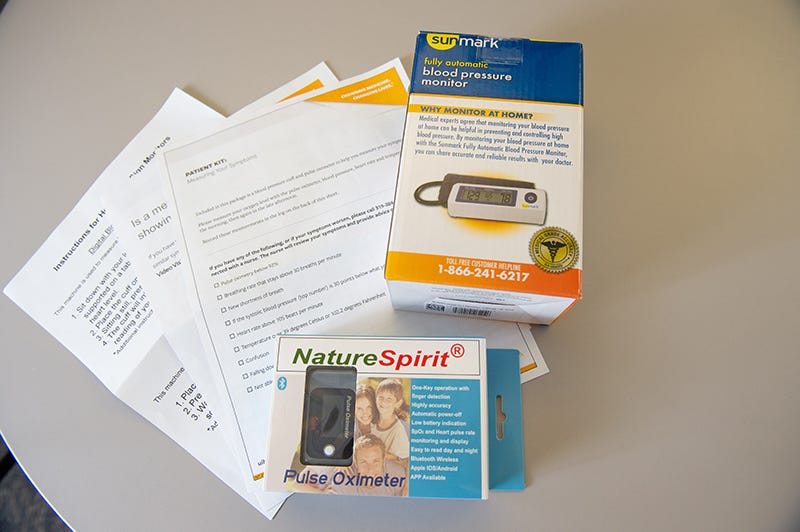
Patients receive a monitoring kit that contains a blood pressure cuff and a pulse oximeter. The patients can monitor and log their vital signs including temperature, blood pressure and oxygen levels that can be checked real-time by the supporting team at real time.
Helping Society
I analyzed how technology can support science, businesses and people. Following are examples of how technology can support societies in general.
Distribution of Groceries
As I mentioned above, vulnerable groups need to be protected the most. These people need to stay home and isolate during a pandemic. However, they still need access to essential supplies, such as groceries and medicine.
Many supermarkets are offering mobile apps/websites that can be used for grocery shopping and they have even adjusted their services. For example Instacart introduced a “leave at my door delivery” service that helps people avoid contact.
Helping Those in Need
COVID-19 makes no discrimination between people. However, not all people have the convenience of isolating at home. There are people that still rely on free meals by NGOs or local governments.
10x Management has partnered with WhyHunger to develop a crowd-sourced open-source interactive map of free meal sites in the U.S.
Cleaning Robots
A public facility or community needs to be disinfected before reopening for people. The video below shows how robots can disinfect subway trains in just 4 hours.
3D Printing for Masks and Ventilators
Global stocks of masks and respirators are insufficient to meet global needs. Many groups are trying to help with the use of 3D printing technology. People at Worcester Polytechnic Institute (WPI), Massachusetts, USA are creating designs to turn inexpensive bag valve mask (BVM) resuscitators into automated ventilators that are needed for patients.
Furthermore, HP and Partners have developed 3D printing solutions to battle COVID-19.
Conclusion
The COVID-19 pandemic is forcing governments, organizations, research centres and companies to push technology further, testing its boundaries.
How can we develop a vaccine quickly?
How can we help people in quarantine who need to work remotely?
How can tracing and monitoring of the virus be done efficiently?
How can we help vulnerable groups during a pandemic crisis?
The answer to all of these questions is with technology and innovation.
So to answer the title of this article, yes the correct use of technology can prevent the next pandemic or at least flatten the curve and reduce the number of cases and deaths.