How to Identify Fake News
Let me introduce you to John. He is using Twitter, he has 3–4 thousand followers and his tweets regularly go viral.
 Image by https://thispersondoesnotexist.com/
One significant detail: John does not exist. It’s a fake image of a fake profile. Someone is feeding John’s profile with tweets that are not always correct or are simply fake news.
John’s Tweet Goes Viral
Do you remember France’s yellow vests? It seems like centuries but their last protest was some months ago on September 2019.
During a protest that took place around March 2019, John posted the following tweet.
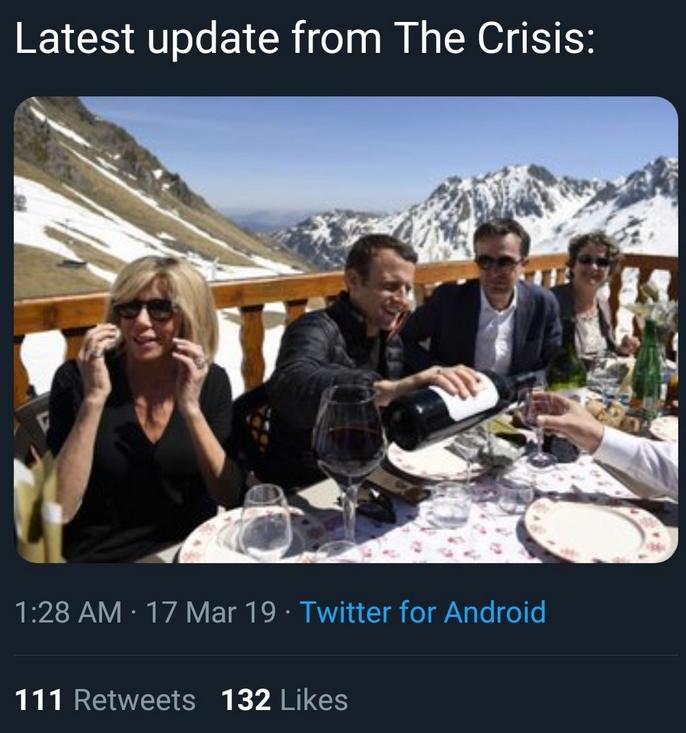 Oh my God, look at Macron having wine while France is on fire. Shame on you Emanuelle!
The tweet soon went viral. People were angry and started to retweet/like the tweet. But was it real? Why not, someone might ask. Here is Macron pouring some wine, the image seems normal and of course John clearly mentions that this is the latest update from the crisis. What can possibly go wrong?
How to Stop Fake News
The process that is suggested by The International Federation of Library Associations and Institutions (IFLA) for spotting fake news is straightforward. I will analyze the eight steps using John’s tweet.
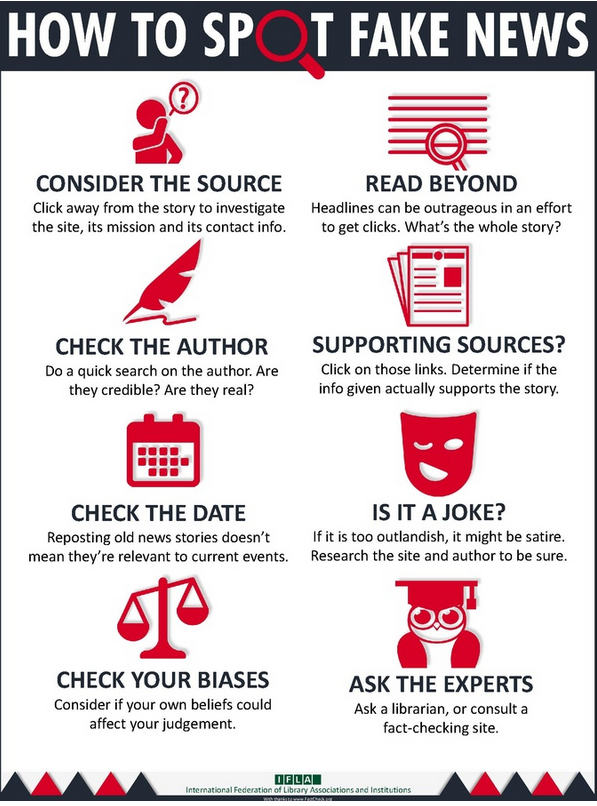 Source: https://en.wikipedia.org/wiki/International_Federation_of_Library_Associations_and_Institutions
Consider the Source
Obviously, John did not take that picture. He downloaded it from somewhere. So let’s find the source.
Step 1: Download the image on our computer/mobile.
Step 2: Go to TinEye and upload the image.
Step 3: Check the results. Hey look, the first result is from Yahoo. Do you remember Yahoo? Well, it might not be huge nowadays but it is still more reliable than John.
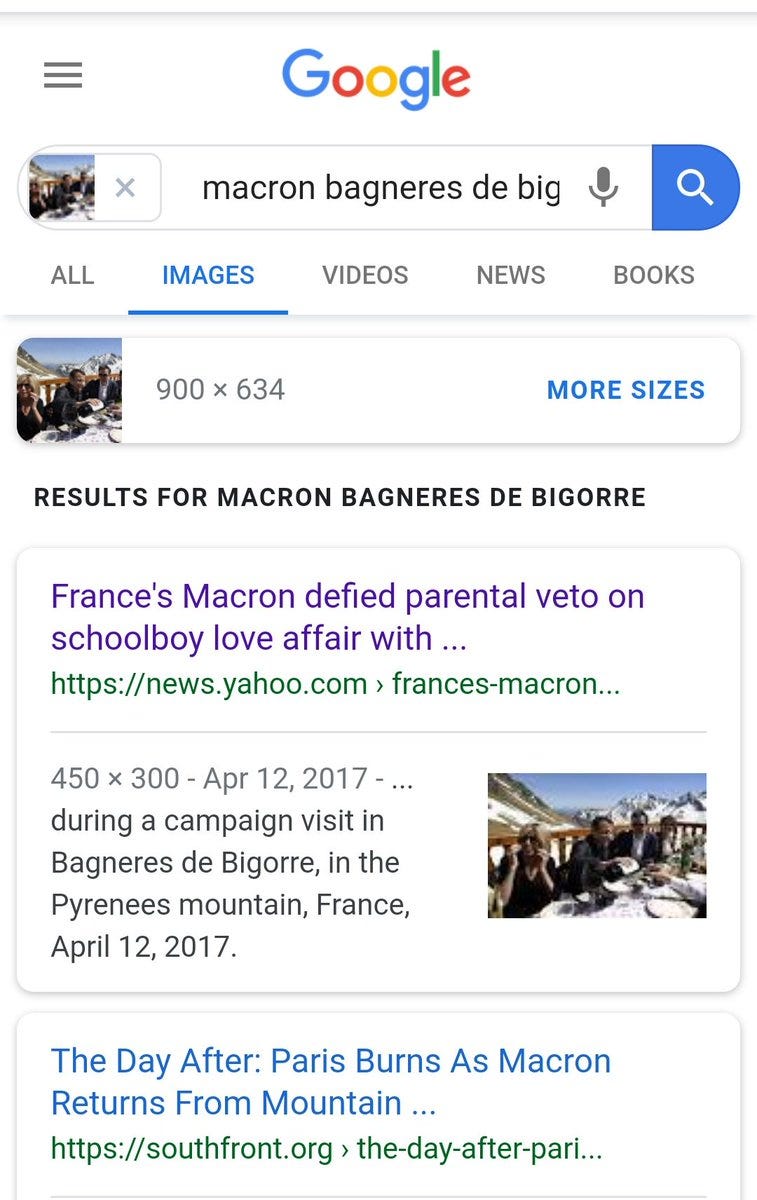
Wait a minute. What is that date? It is 12/04/2017. Almost two years before John’s tweet. Macron was elected president on 07/05/2017.
We can safely conclude that Macron was not enjoying wine in a snowy mountain during the yellow vest protests.
Here is a screenshot of the article:

The conclusion is that John posted Fake News.
Read beyond the headline
Even though we found out from the first step that John’s tweet is fake news let’s continue with the rest of the steps.
What is the whole story? What do media report? If John is right then the media should be reporting it. Couple searches online will prove that no one is talking about this major scandal.
Check the Authors
In Macron’s example, the source is John. That’s it, someone on Twitter, named John. We know that Twitter does not verify users, so why should we trust John? Why should like we like or retweet his tweet? There are reputable and verified journalists in Twitter and John is not of them.
Haje Jan Kamps wrote an article in 2015, where he analyzed Twitter verified users and found that around 25% are journalists and media. John is not one of them.
Assess the supporting sources
Are there any other sources posting the same image? The quick search we did at step “Consider the Source” does not reveal any other supporting sources.
Check the Date of Publication
John posted an image with a small text: “Latest update from the crisis:”. But is is it indeed latest? The quick search we did proved that the image was taken two years ago.
Is it a Joke?
That is an important step that actually might be first on the list. Maybe John is just a troll, and he is just…trolling. Maybe he never meant to be taken seriously. If someone decided to like/retweet his tweet then it’s their problem.
On the other hand, John might be working for a fake news factory and the tweet is intended to harm Emmanuel Macron.
Review your Own Biases
We have democracy so anyone can support Macron or disagree with his actions. However, If you are against Macron it’s much easier to like that image. During that period lots of people were against Macron, so it was easier for John’s tweet to become viral.
Ask Experts
Instead of agreeing with John why don’t we ask an expert? Twitter is full of verified journalists. Why should we trust John and spread his word with a like/retweet and not just ask an expert to verify?
Conclusion
The Internet and especially social media have made it very easy for anyone to publish text, video, images, memes and reach a large audience. On the one hand this is good. People managed to make their voice louder using social media and pass their message. Greta started a movement for climate change and Justin Bieber became a famous singer (well sort of) from this YouTube video. On the other hand, everybody has a voice, including trolls and fake news factories.
Companies are stepping up to fight fake news. Google set up a 24-hour team that removes misinformation from Google search results and Youtube. Twitter is removing tweets containing misleading and potentially harmful content and lastly, Facebook will alert users that receive misleading or false content.
But, technology companies cannot win the war on fake news alone. They need our support. We need to start educating ourselves to be able to identify fake news.
Next time, before you click that retweet/like/share button ask yourself:
- Is this a joke? Then make sure you share it with a smile so other people do not assume it’s real news.
- Do you trust the source/author?
- Is the source/author using any supporting sources?
- Check the date. Is the content relevant today?
- Check your biases: Are you sharing something because it’s real news or because you want to believe it’s real news?
If you still have doubts simply do not click that share/like button. It’s not worth it.