On this Day (July 11) Microsoft announced the end of support for Windows Phone
Introduction
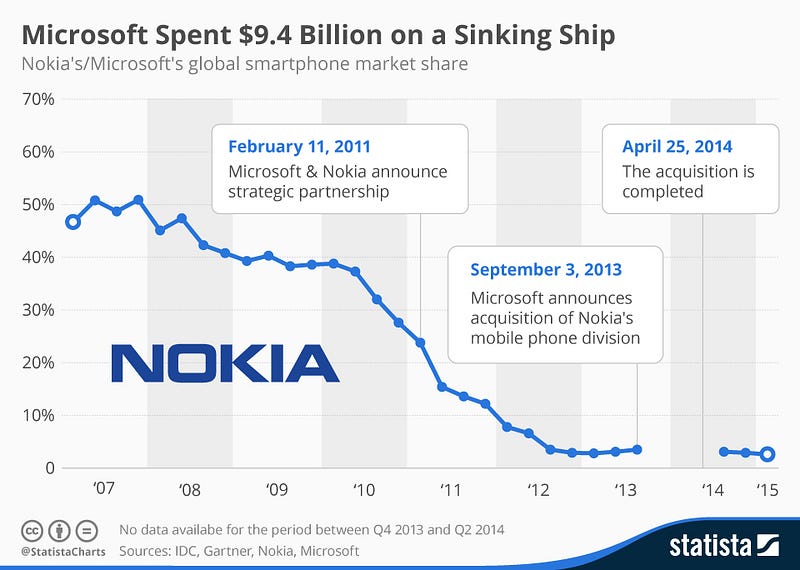
In the ever-evolving landscape of smartphones, Microsoft’s Windows Phone emerged as a promising new device, armed with a fresh user interface, robust features, and the backing of a tech giant. From 1998 to 2012, Nokia was the largest vendor of mobile phones in the world. However, the introduction of Apple’s iPhone and Android-based smartphones crashed Nokia mobile business to the ground.However, despite its potential, the Windows Phone struggled to gain traction in the highly competitive market, ultimately leading to its demise. In this article, we delve into the brief history of the Windows Phone, explore the reasons behind its failure, and reflect upon its significance in the smartphone industry.
Brief History of the Windows Phone
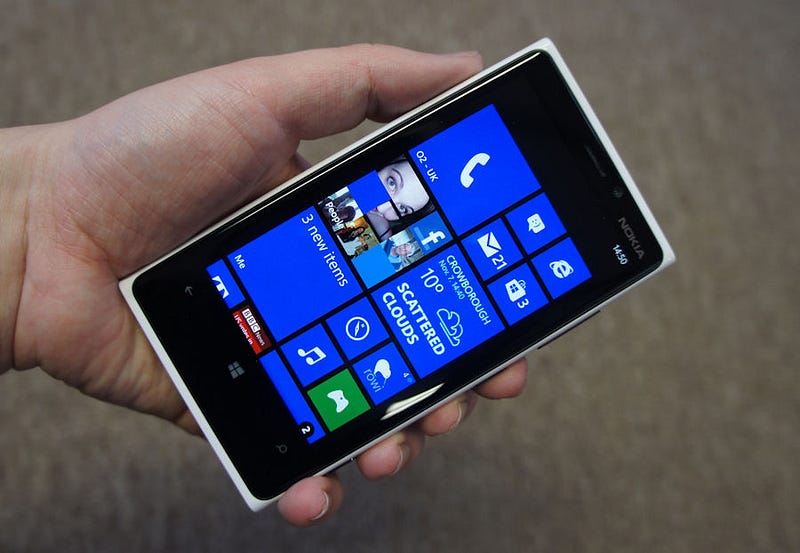
In February 2011, Microsoft announce a major partnership with Nokia and later that year in October the first Windows Phone was introduced. The Windows Phone platform was later introduced by Microsoft in October 2010, succeeding its Windows Mobile operating system.
The new platform aimed to revolutionize the user experience by adopting a distinctive tile-based interface called “Metro,” offering a visually appealing and dynamic user interface. Windows Phone also integrated seamlessly with other Microsoft products, such as Office and Xbox, to provide a unified ecosystem for users.
Microsoft collaborated with major smartphone manufacturers, including Nokia, HTC, and Samsung, to launch a range of devices running on the Windows Phone platform. Despite initial skepticism, the Windows Phone garnered attention for its refreshing approach and received positive reviews for its smooth performance, excellent camera capabilities, and productivity-oriented features.
Why it Failed
Despite its initial promise, the Windows Phone struggled to gain significant market share and ultimately failed to compete with the dominant players like iOS and Android. Several factors contributed to its downfall:
Lack of Developer Support
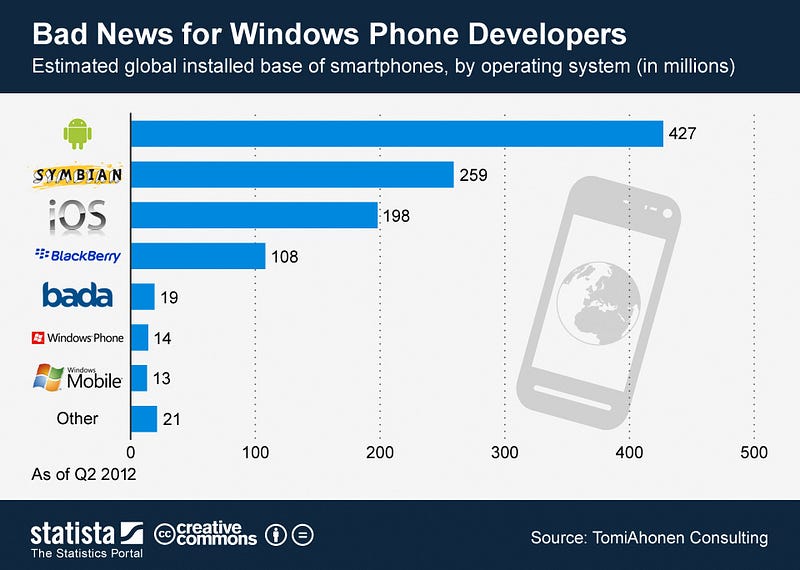
One of the primary reasons for the Windows Phone’s failure was the lack of app availability. Developers were more inclined to focus on iOS and Android platforms due to their larger user bases. Consequently, the Windows Phone app store suffered from a limited selection of applications, leading to a subpar user experience and reduced consumer interest. Microsoft struggled to solve the chicken and eggs dilemma of what comes first, users or the developers.
Strong Competition
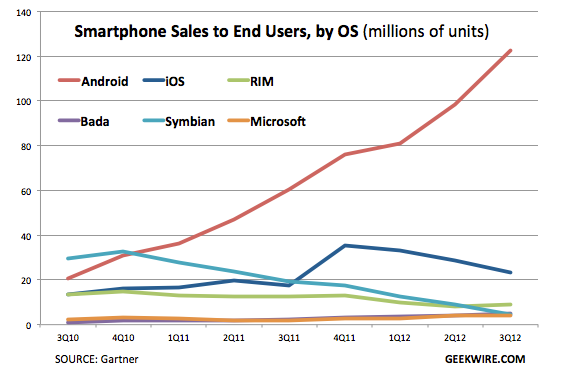
Apple and Android mobile phones had already established a strong foothold in the smartphone market when Windows Phone entered the scene. The duopoly enjoyed a vast array of apps, a loyal user base, and extensive hardware choices. Windows Phone struggled to match the same level of ecosystem maturity and struggled to convince users to switch from their preferred platforms.
Incomplete Ecosystem
Although Microsoft aimed to create a cohesive ecosystem by integrating Windows Phone with its other products, the ecosystem itself felt fragmented. The compatibility and seamless integration with Office and Xbox were admirable, but it failed to provide a compelling reason for users to choose Windows Phone over established alternatives.
Conclusion
The Windows Phone’s failure serves as a cautionary tale of how even a well-designed and innovative product can struggle to succeed in a competitive market. While the Windows Phone boasted a unique user interface and commendable features, it ultimately did not gain momentum due to the lack of developer support, strong competition from iOS and Android, and an incomplete ecosystem.
The failure of the Windows Phone, however, should not overshadow its contributions to the smartphone industry. The platform introduced fresh design concepts and challenged the status quo, pushing its competitors to evolve and refine their own offerings. Lessons learned from the Windows Phone’s shortcomings have undoubtedly influenced subsequent advancements in mobile technology.
As we move forward, it is essential to recognise and appreciate the impact of products like the Windows Phone, as they inspire innovation and pave the way for future developments in the ever-evolving world of smartphones.