On this Day (July 21) Xerox Exits the Computer Market
Introduction
Xerox? Do you mean the company that makes printers? They used to make computers?!??!
This is the story of the Xerox, the company that was suppose to be the first Trillion-Dollar technology company, not those Apples and Microsofts.
 Comparison of Xerox, Apple and Microsoft. Chart by wallmine.com
The Beginning
Xerox was founded in 1906 as The Haloid Photographic Company in Rochester, New York. The company initially specialised in manufacturing photographic paper and equipment.
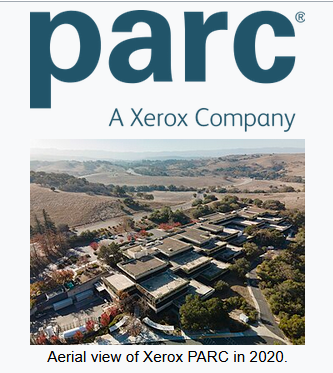
Xerox established the Xerox Palo Alto Research Center (PARC) in 1970. PARC became renowned for its innovative research and development in computing, contributing significantly to the creation of graphical user interfaces (GUIs), Ethernet, and other groundbreaking technologies.
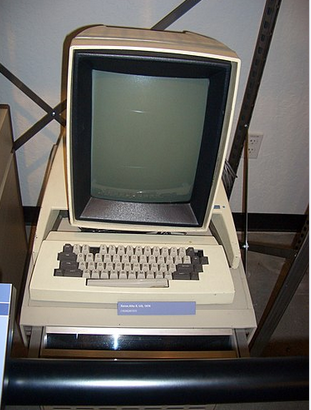
PARC created the Xerox Alto in 1970 which can be considered the first personal computer. Unfortunately, Xerox never saw the potential of such a device in the 70’s and it never took off.
In 1979, Steve Jobs agreed with Xerox to invest $1M in exchange of the technology. Jobs was later quoted as saying, “They just had no idea what they had.” Xerox later tried to release similar systems to Alto but with no success.
The End
In 1985, Xerox decides to exit the computer market. They quietly dropped without anyone noticing since everybody was busy with the mac vs. PC war that was going on back then.
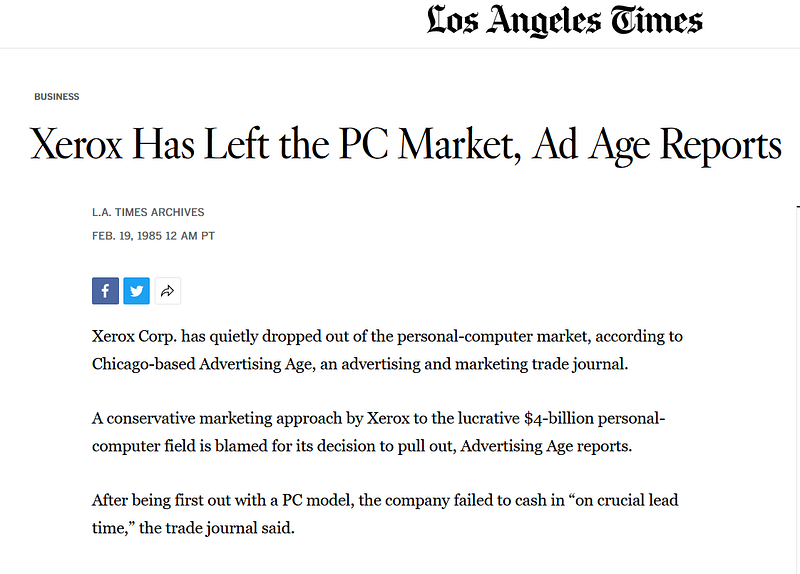
Xerox’s exit from the computer market can be attributed to a combination of factors, including strategic decisions, market dynamics, and competition. Below are some key reasons that contributed to Xerox’s decision to withdraw from the computer market:
- Focus on Core Business: Xerox historically excelled in the photocopier and document management industry. In the early days of computing, Xerox ventured into the computer market to diversify its offerings. However, as the computer market became increasingly competitive, the company decided to refocus on its core business and expertise in document-related products and services. Is this the greatest pivot that never happened? Most probably.
- Intense Competition: The computer market in the 1970s and 1980s was highly competitive, with companies like IBM, Apple, and Microsoft dominating the scene. Xerox faced significant challenges in gaining a substantial market share and competing effectively against these established players.
- Missed Opportunities: Xerox’s PARC was responsible for several groundbreaking innovations, including the development of the graphical user interface (GUI), Ethernet, and the mouse. However, Xerox failed to capitalize on these innovations and bring them to market successfully. They had great products but they just didn’t know how to market them.
- Shifting Technology Landscape: The computer industry underwent rapid advancements, with hardware becoming more powerful and affordable. Xerox faced challenges in keeping up with the pace of innovation and delivering competitive products that could differentiate itself in the market.
- Financial Concerns: Exiting the computer market may have been a cost-cutting measure for Xerox, as it could refocus its resources on its more profitable core businesses, such as photocopiers and document-related services.
Ultimately, Xerox’s exit from the computer market allowed the company to concentrate on its strengths and expertise, and it continued to be a major player in the document management and printing industry. Despite its withdrawal from the computer market, Xerox’s legacy and contributions in computing, especially through its PARC research facility, have had a lasting impact on the technology industry.