Requirements Modelling
Introduction
Requirements modeling involves creating a graphical representation of a system’s requirements. It provides a visual and structured approach to documenting requirements, which helps to ensure that all stakeholders have a clear understanding of the system’s functionalities and constraints. Effective requirements modeling can help to identify potential issues early in the development process, which can save time and resources in the long run.
Use Case Diagram
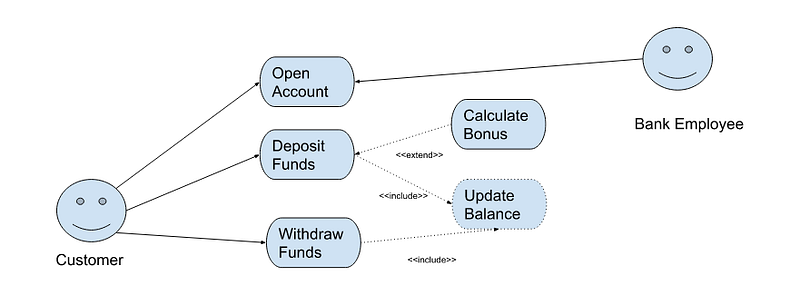
A use case diagram is a graphical representation of a system or a process that depicts the interactions between actors (users or external systems) and the system. It is a type of behavioral diagram in the Unified Modeling Language (UML) and is commonly used in software development to document and communicate the various functionalities and user interactions of a system. The use case diagram illustrates the relationship between actors and the system’s use cases, which are the specific tasks or actions that the system performs in response to the user’s actions. It provides a clear and concise overview of the system’s functionalities and helps to identify potential issues or gaps in the system’s requirements. Associates that can be used:
- Normal lines: Which actors need to interact with which use cases
- <<include>> : make sure that
- <<extend>>: can also
The below diagram illustrates an example of a use case diagram that was developed during the analysis of Unhappy’s Bank account management processes.