What is the Current State of Unhappy Bank?
Introduction
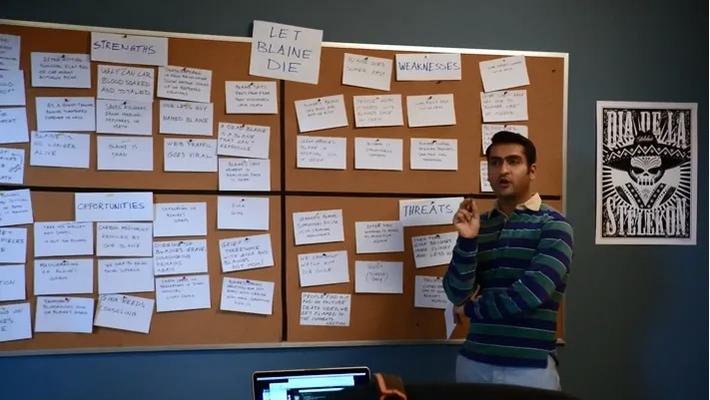
As Unhappy Bank was striving to achieve it’s goals, it was essential to conduct a thorough analysis of their internal and external environment. This is where a SWOT analysis comes into play. By examining an organisation’s strengths, weaknesses, opportunities, and threats, the analyst gains a deeper understanding of the strategic context surrounding their activities. While strengths and weaknesses are internal factors, opportunities and threats are external factors that can have a significant impact on an organization’s success. This article explores the use of a SWOT analysis and its importance in defining the scope of work and addressing key considerations. It also examines how business analysts can effectively discuss the use of a SWOT analysis in their professional endeavors.
 Credits: HBO
Strengths
Below are the strengths of Unhappy Bank:
- Established reputation and trust among customers: One of the biggest and most trusted trusted Banks of the region. A fintech company might be more flexible, but it needs huge efforts to attract new Customers. Unhappy Bank had an already list of customers that could target for further products.
- Diversified product and service offerings: Unhappy Bank offered different products and could target existing customers. For example a customer with a savings account might need a credit card or a mortgage.
- Access to capital and liquidity: Unhappy Bank had the required capital available to invest, while fintechs typically need to undergo several rounds of investment to obtain adequate funding for research and development as well as marketing purposes.
Strengths can also be easily identified using the acronym PRIMEFACT.
- People
- Reputation
- Intellectual property
- Market research
- Ethos (values)
- Finances
- Agility
- Collaborators
- Talents
Weaknesses
While Unhappy Bank has several strengths, it is crucial to consider that there are also significant weaknesses that need to be taken into account.
- Dependence on interest rates and economic conditions: Banks need to be careful with liquidity, especially when interest rates increase or economic conditions change.
- Legacy systems and outdated technology: This was the main reason for the digital transformation project. Unhappy Bank had systems going back to the 90’s. These systems needed to be replaced by more flexible and modernised systems.
- Vulnerability to cybersecurity threats: Another critical weakness of Unhappy Bank was that of a potential cybersecurity breach that could have a far more significant impact on the Bank than on a fintech with only hundreds of customers. With a substantially larger customer base, the financial and reputational costs of a security compromise would be enormous.
- Increasing regulatory compliance and costs
The same acronym PRIMEFACT can be used for weaknesses, not just strengths.
Opportunities
Although Unhappy Bank is an old and established Bank it has lots of opportunities to grow:
- Expansion into new markets or customer segments: The bank decided to offer insurance products such as life insurance linked to it’s products.
- Development of new digital products and services: The aim of the bank is to move away from the traditional brick and mortar model and become mobile first.
- Partnerships and collaborations with fintech companies: When you can’t fight them, join them.
Threats
Finally, Unhappy Bank documented the below threats that need to be taken into consideration as external factors:
- Competition from other banks and financial institutions: Most of Unhappy Bank’s competitors have already mobile apps.
- Economic downturns and recessions
- Changes in regulations and compliance requirements
- Potential for fraud and financial crime
Conclusion
By conducting a SWOT analysis, a bank can gain a deeper understanding of its strengths and weaknesses and develop strategies to address any potential threats or take advantage of new opportunities.
Furthermore, a SWOT analysis can help with the following:
- new products
- Holistic view
- Internal and external analysis
The below steps can be used when running a SWOT analysis:
- Objective
- Research organisation and market
- List organisation strengths
- List organisation weaknesses
- List potential opportunities
- List potential threats
- Prioritize items in lists
- Develop strategy for the issues of the analysis
The results of a SWOT analysis can be used to inform business strategy to help the long-term success and sustainability of the organisation in a constantly evolving and competitive industry.