Why Electronic Voting is a Bad Idea (for now)
Democracy faces challenges such as declining turnout rates and political apathy. My suggestion is focus on education, e-governance and e-participation before introducing e-voting.
Introduction
2020 is the year of social distancing so many people have suggested electronic voting (e-voting) for upcoming elections. Although I am in favour of doing many things, online e-voting is something I am opposed to (for now). I will explain the reasons in this article.
Elections: Current Situation
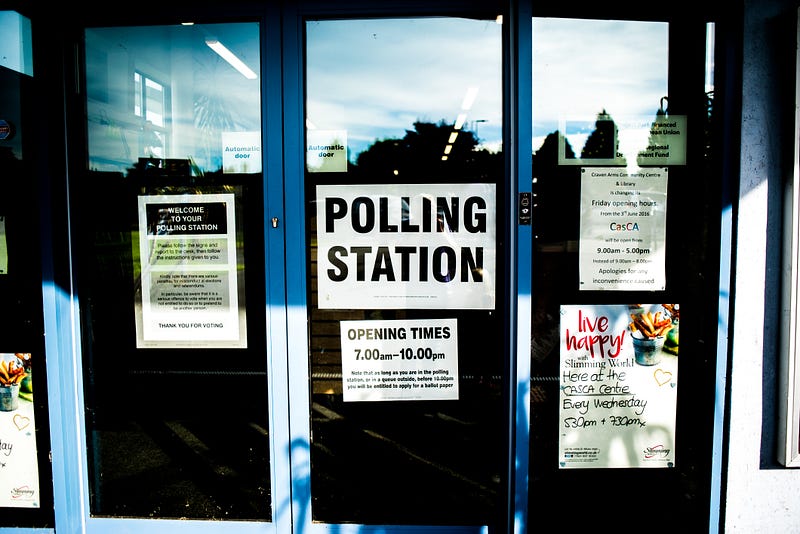
Let’s start with the definition. An election is a formal decision-making process by which a population chooses one or more people for one or more official positions. It is the mechanism that democracy has operated for many years. Governments are trying to provide equal, direct, universal, secret and transparent elections. Some governments succeed, while others fail.
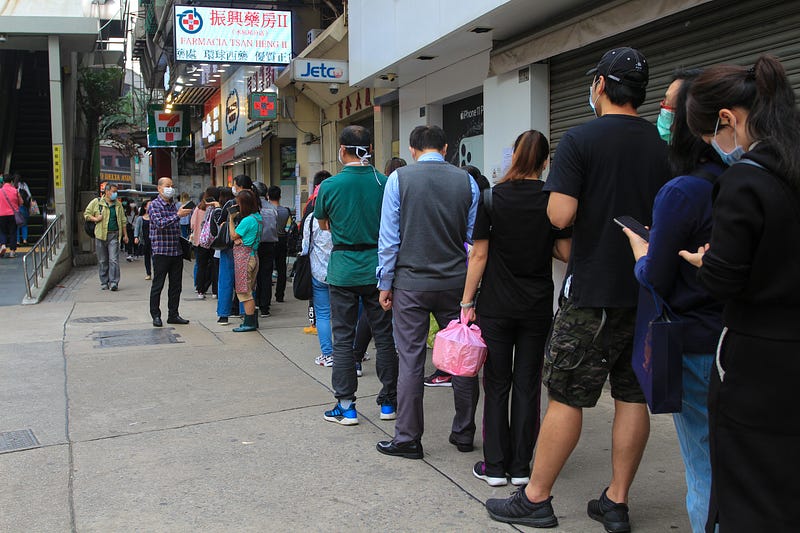
Elections take place all over the world. The biggest elections in the world are held in India, with around 900 million people participating. Governments decide to hold elections on a specific date and on that date people stand in a queue, get authenticated (pre-election stage) using national ID/voter ID, vote (voting stage) using a ballot and at the end of the day, officials count the votes (post-election stage). By using well-defined methodologies, governments can ensure that all three parts are intact: The right people cast their votes and the counting is done correctly.
Electronic Voting
Electronic voting, or e-voting, is voting that uses an electronic voting system for the three parts mentioned above: authentication, voting and counting. There are two basic types of e-voting:
- Use of electronic machines in voting stations
- E-voting via the Internet
In some cases, paper audit trails are used in parallel in case there are issues with counting.
 Source: https://www.flickr.com/photos/uacescomm/40970074165
The Benefits
Below are the benefits of e-voting:
- Anyone can vote from anywhere as long as they are authenticated.
- It’s an easier and more convenient process: no logistics, no queues and no people needed to authenticate voters, or to count their votes.
- There is no paper ballot waste and less logistics so it can be considered to be “greener”.
The Problems
Accessibility
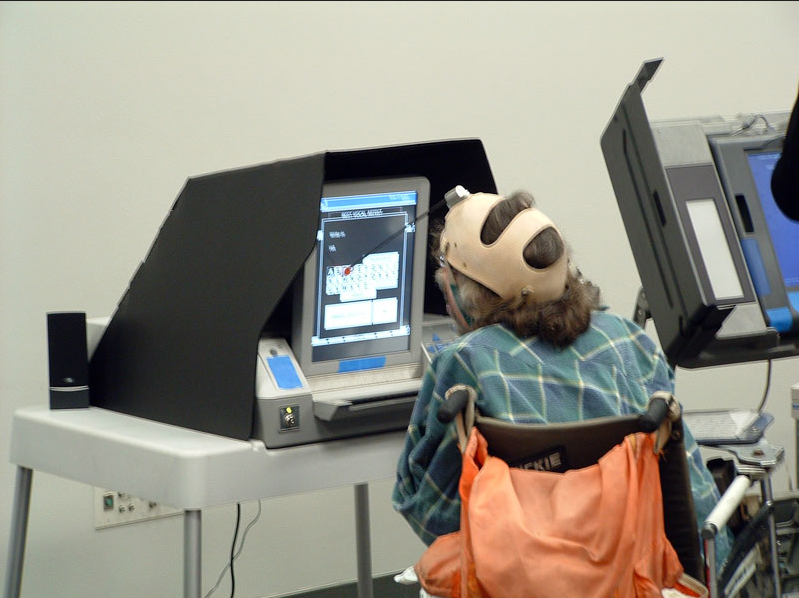
In traditional elections, anyone can vote as long as they can make it to the election stations. It doesn’t matter if they are handicapped, blind or have any other kind of disability. Furthermore, no special knowledge is needed, just a cross next to the face/name of a candidate.
E-voting has several implications and needs special design to become universally accessible. For example, how can a blind person vote from their home?
 Source: https://en.wikipedia.org/wiki/Suffrage_for_Americans_with_disabilities
Transparency
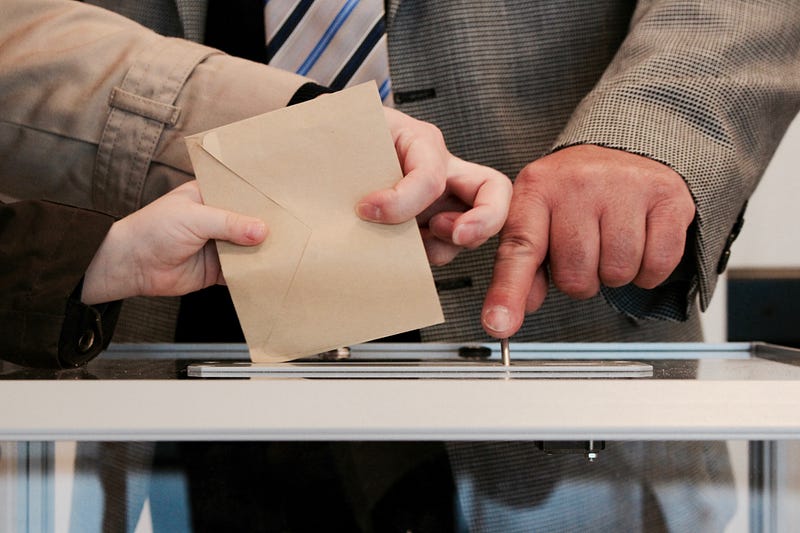
Iowa, USA held its primary elections in April 2020. It was decided that the post-voting stage (counting) to be done electronically and it did not go great. (Iowa Caucus tech meltdown). A paper backup was used to verify the results.
Paper votes can be re-counted again and again from different parties to come to a conclusion. How can an electronic system verify the votes electronically?
Security
The 2016 US presidential elections will go down to history as the ones with “Russian meddling”. Although lots have been done since then, a report from Stanford Cyber Policy Center outlines the threats facing the 2020 elections. Voting machines without a paper backup can be compromised and so far no voting system has proven to be hack-proof.
Some experts such as Eugene Kaspersky suggest the use of blockchain for increased security. However, blockchain is by design immutable. Once a piece of information (or an electronic vote) goes in, it never changes. What would happen if during the elections a security breach has been identified? The elections would need to be repeated.

Convenience
Let’s say technology companies managed to make the pre-election stage secure for anyone to vote. That would lead to complications as it would require digital signatures, two-factor authentications, or even multiple authentication processes, making it less convenient to vote rather than just stopping by a close voting station.
Cost
Considerable investments need to be made to establish reliable voting systems. The election budget will not decrease as expected since traditional elections will still be needed for a considerable period. Even in Estonia, one of the most digitalized countries in the world, the participation of I-voters (voting electronically) was only a fraction of the population. The rest voted with a traditional paper ballot.

Prerequisites for e-Voting
Education
Young people should be taught the value of voting and why it is important early on. They need to understand what happens when they don’t vote. Not only that, but they need to be involved in the participation of decision making.
Furthermore, all people should increase their “digital literacy” knowledge to ensure they will be ready for e-voting. The chart below shows the Digital Economy and Society Index for 2019. Many European countries have low use of internet services and the integration of digital technology. Furthermore, they don’t use digital public services that much. I believe that if e-voting was introduced in a country such as Bulgaria (for example), it would fail.
We need to increase the numbers below. We don’t just need everybody to be connected, but we need everybody to use internet services and mostly digital public services.

E-Governance
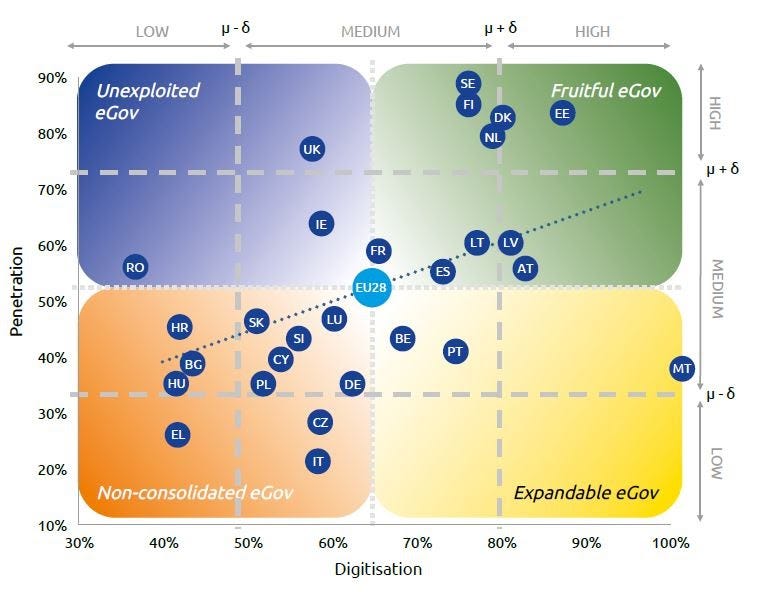
Before asking citizens to vote electronically, governments should ensure that citizens are active in other loose forms of engagement. Can people interact with the government online without the need to call for a service or (God forbid) need to stand in a queue?
We need to ensure that governments use information and communication technologies to embrace good government principles.
The following chart shows the penetration (adoption of digital public services) and digitisation (level of the back and front offices of public administrations). We need more countries to move from the orange area to the green area.
 Source:
 E-Participation
Citizens need to be active throughout the year, not only during elections. Can the citizens raise their voice at any time? An example is the European Citizens’ Initiative (EIC) which is a formal but loose method of participation. An e-petition is created and if a certain number of signatures is gathered, the European Commission will decide on what action to take. Are the people participating in this initiative that it’s been going since 2011? Here are some numbers for the reader to decide if it’s successful or not.

Trust
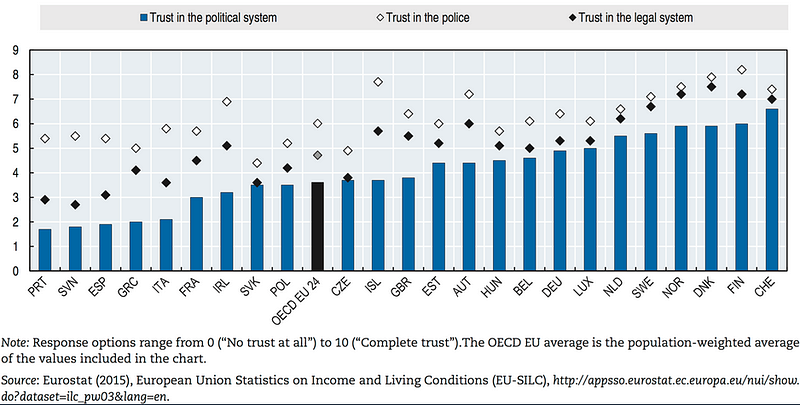
Can citizens trust that their government will provide fair elections? Is there any fear that votes can be changed intentionally to alter the result?
Do you think people in Portugal, Slovenia, Spain, or Greece will trust their governments if they suddenly change the voting system to an opaque and complicated e-voting system? I don’t think so.
Conclusion
I believe that all people should be involved in politics and always vote. Elections are at the heart of the democratic process. Working election procedures will not be changed without good reasons.
E-voting systems will need to provide the democratic principles of traditional voting which are equal, direct, universal, secret elections for all people. Furthermore, e-voting systems will need to be user friendly, efficient, cost-saving and fail-proof. E-voting needs to be organized in a way it will be accessible, transparent (no one can object) and meaningful to all citizens.
Before countries fully digitize their elections, they need to ensure that citizens are active, empowered with political concerns.
For now, e-voting will just increase public spending since traditional voting will still be needed. I strongly believe that it will not increase participation on its own. Someone who votes online would most probably vote at a traditional voting station as well. A study from Switzerland found that e-voting had no effect on turnout.
Governments need to focus on declining turnout rates and political apathy. They need to gain the trust of the citizens and increase e-participation with other forms of “loose voting” such as e-petitions. If governments manage to do all these, then e-voting can become a reality.